Your heating and cooling system pulls air through a filter every time it runs. When that filter fills with dust, pet hair and lint, the system has to work harder to move air, and less of the dust gets trapped. Changing the filter is one of the easiest and cheapest maintenance tasks in any home, and it only takes a couple of minutes.
Why the Filter Matters
An HVAC filter does two main jobs. First, it protects the equipment. Dust that slips past a clogged or missing filter can coat the blower motor and the indoor coil, making them less efficient and more likely to need repairs. Second, it catches some of the particles circulating in your home’s air.
The U.S. Department of Energy notes that replacing a dirty, clogged filter with a clean one can lower an air conditioner’s energy consumption by 5% to 15%. A clean filter also helps air move freely, so rooms heat and cool more evenly.
How Often to Change It
The right schedule depends on the filter type and your household. These are common starting points, but always check the filter packaging and your system manufacturer’s guidance:
| Filter type | Typical replacement interval |
|---|---|
| Thin fiberglass (1 inch) | About every 30 days |
| Pleated (1 inch) | About every 1 to 3 months |
| Thick media filters (4 to 5 inches) | About every 6 to 12 months |
| Washable/reusable | Clean as directed, often monthly |
Change filters more often if you:
- Have pets, especially ones that shed heavily
- Have family members with allergies or asthma
- Live in a dusty area or near construction
- Run the system nearly nonstop in very hot or cold weather
- Recently finished a renovation that created dust
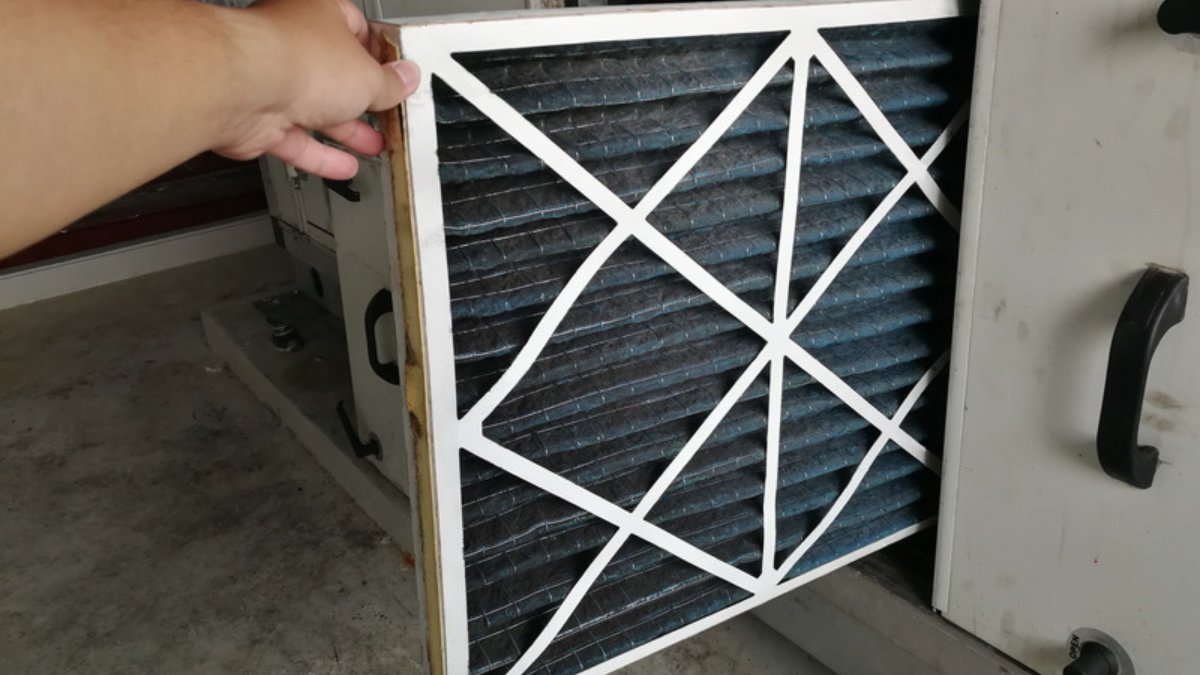
The simplest rule: check the filter every month. If it looks gray and clogged, or light barely shines through it, replace it, no matter what the calendar says.
Finding Your Filter and Its Size
Filters are usually in one of these spots:
- In a slot on the side, top or bottom of the furnace or air handler
- Behind a large return air grille on a wall or ceiling
- In multiple return grilles in larger homes
The size is printed on the edge of the filter frame, such as 16 x 25 x 1. The first two numbers are width and height in inches, and the last is thickness. Write it down, or take a photo of the label. The “nominal” size printed in bold may be slightly different from the actual measurements, so buy by the printed nominal size.
Understanding MERV Ratings
Many filters are rated using MERV (Minimum Efficiency Reporting Value), a scale developed by ASHRAE. Higher numbers capture smaller particles.
- MERV 1 to 4: Basic fiberglass filters that mainly protect equipment from larger dust
- MERV 5 to 8: Common pleated filters that catch dust, pollen and pet dander
- MERV 9 to 13: Higher-efficiency pleated filters that capture finer particles
Higher isn’t always better for every system. Some filters with higher ratings create more resistance to airflow, and not every residential system is designed for them. Check your system’s manual or ask an HVAC technician which range your equipment can handle. Some brands use their own rating scales, so compare carefully.
How to Change an HVAC Filter
- Turn the system off at the thermostat so it doesn’t pull dust into the unit while the filter is out.
- Open the filter slot or grille. Some grilles have clips or screws.
- Slide out the old filter. Note which way the arrow on the frame points.
- Check the size and confirm your new filter matches.
- Insert the new filter with the airflow arrow pointing toward the furnace or air handler, which is the direction air flows. For a return grille, that usually means the arrow points into the wall or ceiling, away from the room.
- Close the slot or grille and make sure there are no gaps around the filter.
- Turn the system back on.
- Write the date on the edge of the new filter with a marker so you know when it went in.
Bag the old filter before throwing it out to keep dust contained.
Other Simple Habits That Help Your System
A clean filter works best when the rest of the airflow path is clear, too. A few extra habits take only minutes:
- Keep vents and return grilles open and unblocked. Furniture, rugs and curtains over vents can restrict airflow. Closing many supply vents to “save energy” can also make some systems work harder.
- Dust the grilles. Vacuum supply vents and return grilles every few months with a brush attachment.
- Clear the outdoor unit. Keep leaves, grass clippings and shrubs away from an outdoor AC or heat pump unit so it can breathe.
- Stock up. Buy filters in multipacks so a replacement is always ready. Store them flat in a dry place so the frames don’t bend.
- Set a reminder. A recurring phone alert on the first of each month is an easy way to remember the filter check.
Common Mistakes
- Installing it backward. Always follow the airflow arrow.
- Using the wrong size. Gaps around a too-small filter let dust bypass it completely.
- Running without a filter. Even a few days without one can let dust coat internal parts.
- Forgetting extra return grilles. Some homes have more than one filter.
- Choosing the highest MERV without checking. A filter that’s too restrictive for your system can reduce airflow.
When to Call an HVAC Pro
A fresh filter is just one part of HVAC care. Most manufacturers recommend professional maintenance, often a cooling tune-up in spring and a heating checkup in fall. Call a licensed HVAC technician if you notice weak airflow even with a clean filter, ice on the indoor or outdoor coil, unusual noises, burning smells or rooms that won’t reach temperature. Renters should check their lease; many landlords supply filters or handle the change themselves.
Pairing filter changes with smart temperature settings can boost comfort and efficiency. See our tips on thermostat settings for each season.
Frequently Asked Questions
What happens if I don’t change my HVAC filter?
Airflow drops, the system works harder and uses more energy, and dust can build up inside the equipment. Over time, that can lead to repairs.
Can I vacuum and reuse a disposable filter?
No. Disposable filters are designed for one use. Vacuuming can damage the material and won’t restore how well it works. Use a washable filter if you want a reusable option.
Do I need different filters for summer and winter?
Usually not. The same filter works for both heating and cooling. You may just need to change it more often during seasons of heavy use.
Set a monthly reminder to check your filter and add it to your seasonal home maintenance checklist. It’s a two-minute habit that helps your whole system run better.