Your thermostat is the control panel for the biggest energy user in your home. A few well-chosen settings, adjusted as the seasons change, can keep you comfortable while your heating and cooling system runs less. Here is how to set a schedule that fits real life, plus the common mistakes that quietly undo your efforts.
Why Thermostat Settings Matter So Much
The U.S. Department of Energy notes that heating and cooling account for the largest share of energy use in a typical home. The thermostat decides how often that equipment runs. The basic idea is simple: the smaller the difference between the indoor temperature and the outdoor temperature, the less your system has to work.
The Department of Energy also notes that turning your thermostat back 7 to 10 degrees Fahrenheit for about eight hours a day can reduce yearly heating and cooling energy use by as much as 10 percent. Those eight hours are often the time you are asleep or away at work, so you may barely notice the change.
Clearing up a common myth
Many people believe it takes more energy to warm a house back up after a setback than you save by turning it down. For furnaces and boilers, that is not the case. A cooler house loses heat to the outdoors more slowly, so you use less energy overall during the setback period. Heat pumps are a special case, covered below.
Winter Settings
The Department of Energy suggests setting your thermostat to about 68 degrees Fahrenheit while you are awake and at home in winter, and lower while you are asleep or away. Here is a sample weekday schedule you can adjust:
| Time block | Suggested setting |
|---|---|
| Wake up (about 6:00 a.m.) | 68°F |
| Away at work or school | 60–62°F |
| Evening at home | 68°F |
| Sleep (about 10:00 p.m.) | 60–64°F |
Set the warm-up to begin about 30 minutes before you wake or arrive home. Many smart thermostats learn how long your home takes to recover and start early on their own.
Winter comfort tips
- Open curtains on sunny windows during the day to let in free heat, and close them at night.
- Use flannel sheets or an extra blanket so a cooler bedroom still feels cozy.
- Run ceiling fans clockwise on low speed to gently push warm air down from the ceiling.
- Seal leaks so warm air stays inside. Our guide to sealing drafts around doors and windows shows how.
Avoid setting the house too low if you have pipes in exterior walls, a crawl space or an unheated area that could freeze. Many people stay at 55 degrees Fahrenheit or higher when traveling in cold weather.
Summer Settings
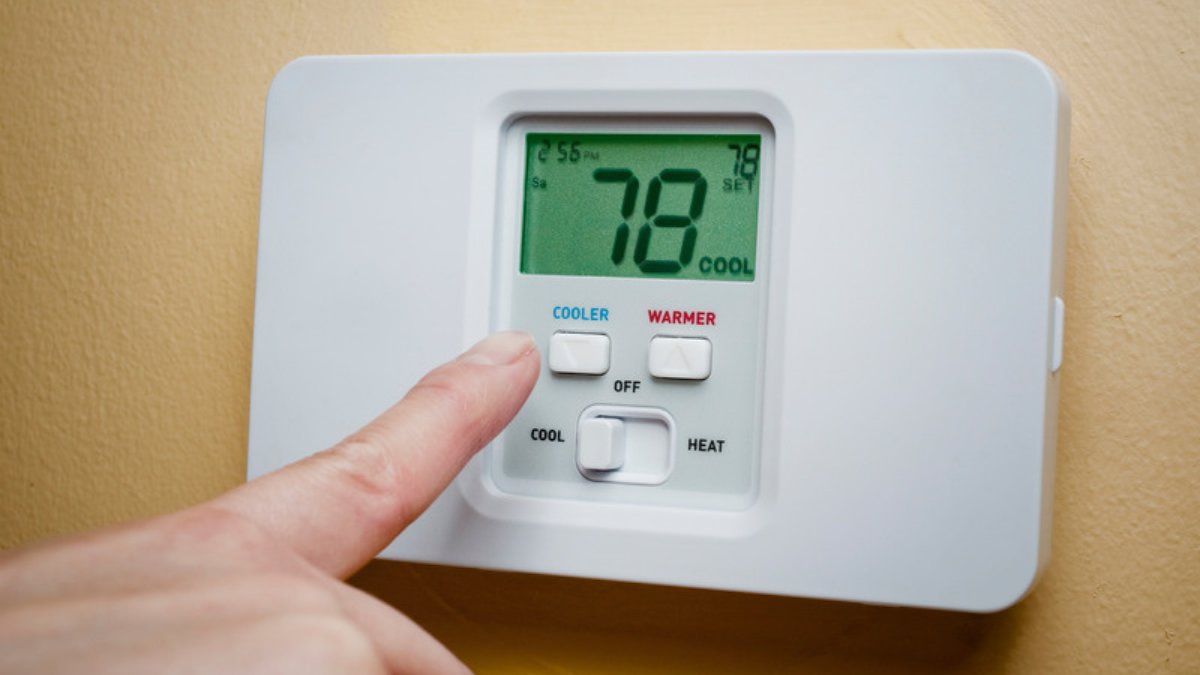
For cooling, the Department of Energy suggests setting your thermostat to about 78 degrees Fahrenheit when you are home and need cooling, and higher when you are away.
| Time block | Suggested setting |
|---|---|
| Morning at home | 78°F |
| Away at work or school | 85–88°F |
| Evening at home | 78°F |
| Sleep | Whatever is comfortable; many people prefer a little cooler |
Summer comfort tips
- Use ceiling fans set to spin counterclockwise. The Department of Energy notes this can let you raise the thermostat about 4 degrees Fahrenheit without feeling less comfortable. Turn fans off when you leave the room.
- Close blinds on east-facing windows in the morning and west-facing windows in the afternoon.
- Run the oven, dryer and dishwasher in the cooler evening hours when you can.
- On cool nights, turn off the air conditioner and open windows if outdoor air is comfortable and clean.
Spring and Fall: The Shoulder Seasons
In spring and fall, outdoor temperatures can swing widely in a single day. This is when people often waste energy by heating in the morning and cooling in the afternoon.
- Widen the gap. If your thermostat has an “auto” mode that switches between heating and cooling, set the heat and cool points several degrees apart, such as heat at 66°F and cool at 78°F.
- Try “off.” On mild days, turning the system off and using windows, fans and layers may be all you need.
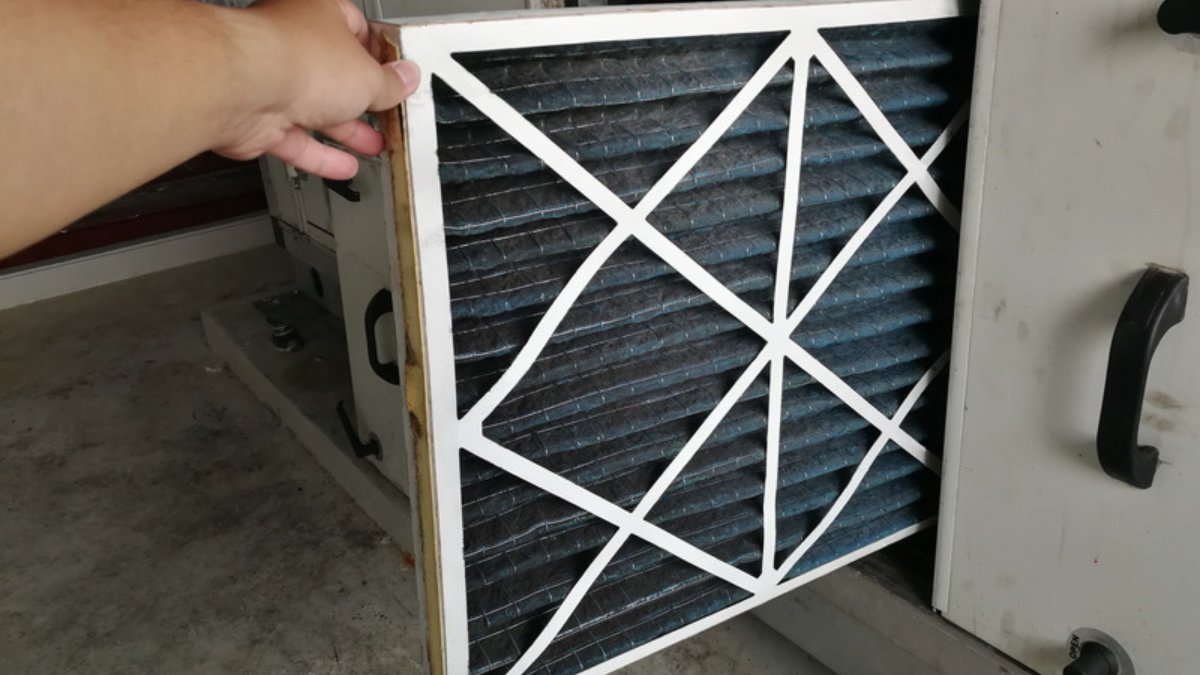
- Check the filter. The change of seasons is a good reminder to replace or clean your HVAC filter.
Special Notes for Heat Pumps
Heat pumps heat and cool very efficiently, but many have electric resistance backup heat, sometimes called auxiliary or emergency heat. That backup uses much more energy. If you set the thermostat back too far and then ask for a quick recovery, the system may switch on the backup to catch up.
- Use smaller setbacks, such as 2 to 4 degrees, or none at all, depending on your system and climate.
- Choose a thermostat made for heat pumps, with a gradual or “smart” recovery feature.
- Watch for an “aux heat” indicator. If it comes on often in mild weather, ask an HVAC technician to check the system.
Your heat pump manufacturer or installer can tell you the best settings for your model.
Getting the Most From a Smart or Programmable Thermostat
A programmable thermostat only helps if it is actually programmed. A smart thermostat adds features like phone control, occupancy sensing and energy reports. Either way, a few habits make a big difference:
- Set the schedule once, carefully. Program separate weekday and weekend schedules if your routine changes.
- Avoid constant overrides. Holding a temperature “permanently” cancels the schedule. Use temporary holds instead.
- Use away or vacation modes when you travel.
- Do not crank it. Setting the heat to 80°F does not warm the house faster; most systems deliver heat at the same rate no matter the setting. It only means the house overshoots.
- Check the location. A thermostat in direct sun, near a lamp, over a heat vent or by a drafty door will read the wrong temperature. If yours is in a poor spot, consider a remote sensor, or ask an HVAC pro or electrician about relocating it.
If you install a new thermostat yourself, turn off power to the HVAC system at the breaker or the furnace switch first, label the wires before you disconnect them, and follow the instructions. Some systems need a common wire (often marked C). If your existing thermostat is high-voltage, typical of baseboard heaters, or if the wiring is unclear, call a licensed electrician or HVAC technician.
Frequently Asked Questions
What temperature should I set my thermostat at night?
In winter, many people find 60 to 64 degrees Fahrenheit comfortable for sleep with good bedding. In summer, choose what feels comfortable, and use a fan to help.
Should I leave the thermostat at one temperature all day?
For most furnace and air conditioning systems, a setback while you sleep or are away uses less energy than holding one steady temperature. Heat pumps may do better with smaller setbacks.
Does the fan setting matter?
Yes. “Auto” runs the blower only when heating or cooling. “On” runs it constantly, which uses more electricity. Use “auto” unless you have a specific reason not to.
The right thermostat settings are the ones you will actually keep. Start with the suggested numbers, adjust a degree at a time for comfort, and let the schedule do the work. For more ideas, see our guide to energy saving at home.